
Case study · Website work
Kenai Realty & KP Vacation Rentals
Sister sites — real estate and vacation rentals, Soldotna, Alaska
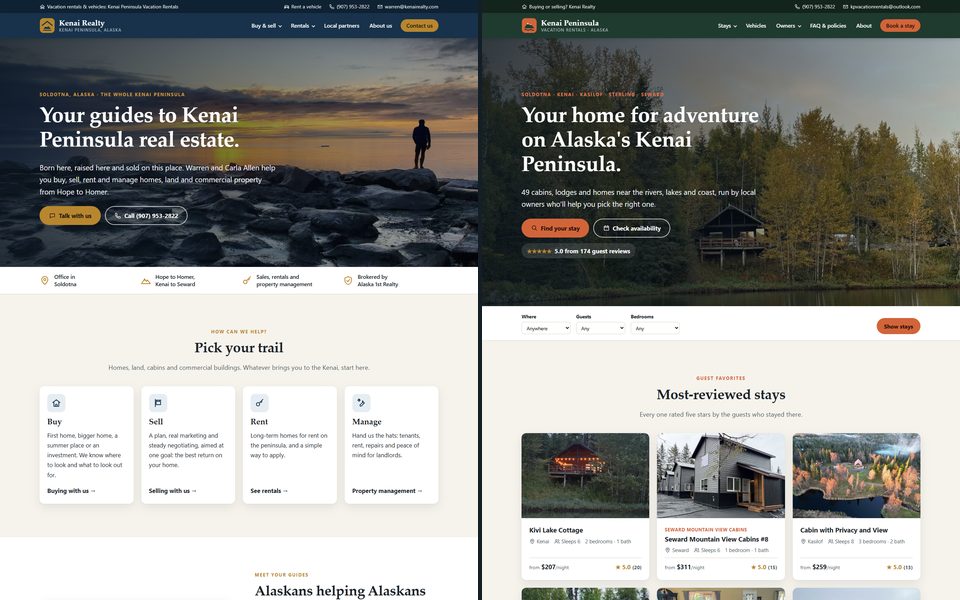
One family runs two businesses on Alaska's Kenai Peninsula: a real estate office, and a vacation rental company with cabins, lodges and homes from Soldotna to Seward, plus a fleet of SUVs and pickups for visitors. The sites lived in two places, WordPress and a hosted rental site, and looked like two unrelated companies. Vehicle rentals ran on a separate paid account of their own.
What we built
- Two sites, one family look. Kenai Realty covers buying, selling, renting and property management. KP Vacation Rentals has a page for each property and each area. Each points customers to the other where it helps: house-hunters who need a vehicle, owners who want their home looked after over the winter.
- Stays still book through OwnerRez, the rental software the owners already run their calendars and guests in. Its availability search and booking widgets sit inside the new pages, restyled to match the site, and every property's address in OwnerRez now points at its new page, so guest emails link to the right place.
- A vehicle booking system of their own. The fleet lives on the site: photos, seats and the daily rate, with weekly and monthly discounts worked out automatically. A customer picks dates, sees which vehicles are available and what the trip costs, and pays by card on Authorize.Net's own payment page, so no card number touches the site. Payments are checked against Authorize.Net before a booking is confirmed, and the admin can refund or void from the booking itself.
- One trip, two bookings. Dates picked on the home page or the stays search carry through: the stays free for those dates, the vehicles free for the same days beside them, and a small trip bar that keeps track of the stay and the vehicle until both are booked. People who only need a vehicle can book from the vehicles page on its own.
- An admin the owners run themselves. Sign-in is Internet Identity, with no passwords to manage. Bookings, a fleet calendar, blocked dates, the rental agreement and settings each have a tab. Vehicles are edited in place in the list, reordered by dragging, and can be set to off-season: still shown to customers, not bookable. The whole fleet can be switched at once.
- Nothing lost in the move. Every old address, from the WordPress pages and the hosted rental site alike, redirects to its new page, and both sites carry the search basics: canonical addresses, sharing previews, structured data and sitemaps.
How it's built
Each site is plain HTML, CSS and JavaScript on its own asset canister on the Internet Computer, built from source pages by a small generator and deployed with RoamRock's site-kit. A push to the main branch publishes them. Vehicle bookings live in a separate back-end canister written in Motoko, which keeps the fleet, the bookings and the settings, checks payments with Authorize.Net over HTTPS on a timer, and only lets the owners' Internet Identities make changes. The admin's look became RoamRock's admin kit, which our other client admins now use too.
Outcome
Both sites are live on their own domains, off WordPress and off the hosted rental site. Vehicle rentals are moving from a separate paid account onto the site, with card payments going to the business's own merchant account; the fleet shows now, and online booking opens for the next season.